You finally picked the right flush door for your home or office. Now comes the part that most people underestimate – the installation. A door that looks great in a showroom can quickly become a headache if it’s installed incorrectly. It may not close properly, the frame may warp over time, or the hinges may pull loose after just a few months of use.
The good news? Most installation problems are entirely avoidable. Whether you’re hiring a carpenter or overseeing the work yourself, understanding the right process and knowing what can go wrong, makes all the difference. Here’s a guide to walk you through everything you need to know about flush door installation, from choosing the right materials to avoiding the mistakes that cost homeowners and contractors time and money.
What are Flush Doors?
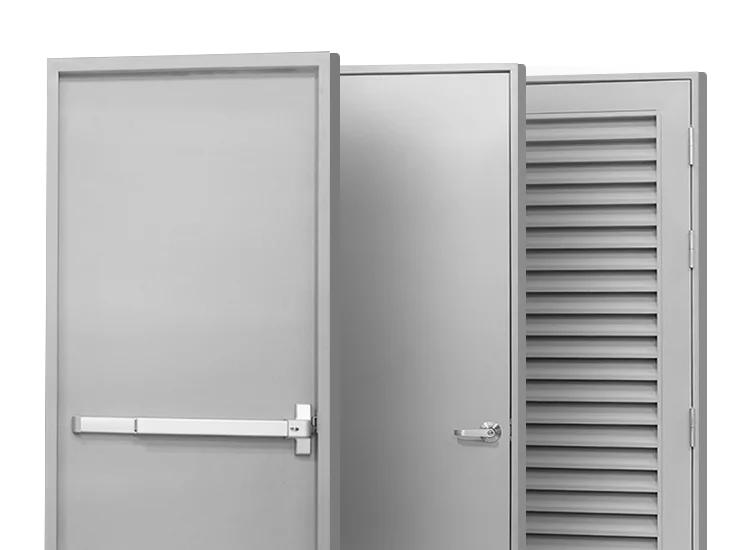
A flush door is a type of door defined by its smooth, flat surface on both sides. Unlike panel doors with raised or recessed designs, a flush door has a clean, minimal look that fits naturally into modern and contemporary interiors.
In the Philippines, flush doors are widely used in bedrooms, offices, utility rooms, and commercial spaces. They’re practical, relatively affordable, and easy to customize with different finishes, paint colors, or hardware. Their straightforward design also makes them one of the easier doors to install, but only when done properly.
Flush doors come in two main core types: hollow core and solid core. Hollow core doors are lighter and more budget-friendly, making them ideal for interior bedroom doors. Solid core doors are heavier, more durable, and offer better sound insulation, which is a better fit for office spaces or rooms that need more privacy.
Understanding the Materials of Flush Doors
The material of your flush door directly affects how it performs after installation. Choosing the wrong material for the wrong environment is one of the most common, and sometimes costly, mistakes Filipino homeowners make.
- Steel flush doors are the most durable option available. They resist warping, moisture, and physical impact, making them ideal for high-traffic commercial spaces, industrial facilities, and any area exposed to the elements. Steel doors from manufacturers like Janus Steel are built to withstand daily heavy use without compromising on appearance.
- Plywood flush doors, particularly those made from marine plywood, are a popular local choice for residential applications. Marine plywood holds up better against humidity compared to ordinary ply, which matters a lot in the Philippine climate.
- MDF (Medium-Density Fiberboard) flush doors offer a smooth, paint-ready surface. They’re affordable and look clean, but are more vulnerable to moisture damage, so they’re best kept to air-conditioned interiors.
- PVC flush doors are lightweight and highly resistant to water, making them a practical choice for bathrooms and laundry areas.
Understanding which material suits your space, before installation, saves you from replacing a door prematurely.
Practical Steps for Steel Flush Door Installation
Installing a steel flush door is more demanding than installing a lightweight interior door. Steel doors and their frames are heavier and require precise anchoring into the surrounding structure. Here’s how a proper installation should go.
Step 1: Measure the Rough Opening Accurately
Before anything else, measure the rough opening of your wall — both height and width. Your steel door frame should fit within the rough opening with a clearance of approximately 10–20mm on all sides to allow for proper leveling, anchoring, and grouting.
Measure twice and confirm your measurements before the frame arrives on site. Steel door frames are fabricated to specific dimensions and cannot be trimmed or adjusted in the field the way wood can. An inaccurate measurement means delays, additional cost, and the risk of a poor fit.
Step 2: Prepare the Steel Door Frame (Jamb)
Steel flush doors use steel door frames (jambs), not wooden ones. These frames are typically fabricated from cold-rolled steel or galvanized steel and are designed to be embedded directly into the surrounding masonry or concrete wall structure.
Before positioning the frame, inspect it for any damage, warping, or misalignment from shipping or fabrication. Check that the frame corners are perfectly square using a steel square. Any distortion at this stage will carry through to the finished installation.
Verify that all anchor lugs or anchor bolts (the pre-welded metal tabs or bolt holes built into the frame) are intact. These are what tie the frame to the wall structure, so their condition is critical.
Step 3: Set and Anchor the Steel Frame
This is the most critical phase of a steel door installation. Unlike wood frames that rely on mechanical fasteners into timber, steel frames are anchored directly into the masonry or concrete wall.
- Position the frame in the rough opening. Lift the steel frame into the opening and center it within the rough opening. Use steel or plastic shims to hold it in position temporarily.
- Check plumb and level. Use a quality spirit level on both the vertical jambs and the horizontal head of the frame. The frame must be perfectly plumb on all sides. Even a slight deviation will cause the door to hang incorrectly or fail to latch properly. Take your time here — this step determines everything that follows.
- Secure the anchor lugs. Bend or weld the anchor lugs against the masonry or embed them into the wall structure as specified in the frame design. For new construction, anchor lugs are typically cast into the concrete wall pour. For retrofit installations, expansion bolts or chemical anchors are drilled into the masonry to secure the frame.
- Grout the frame. Pack non-shrink grout or cement mortar into the gap between the steel frame and the rough opening wall. This grouting is what permanently locks the frame in place and transfers load to the wall structure. Make sure the grout fills the space completely without voids. Allow the grout to cure fully before hanging the door.
- Re-check alignment after grouting. Before the grout sets completely, re-verify the frame is still plumb and level. Grouting pressure can sometimes shift the frame slightly. Make any adjustments before the grout hardens.
Step 4: Hang the Steel Door
Steel flush doors come with pre-welded or pre-fitted hinges on the door slab, and corresponding hinge preparations on the steel frame. There is no chiseling or mortising involved — the hinge recesses are precision-fabricated at the factory.
With the frame fully set and grouted, have at least two workers on hand to lift the door. Steel doors are significantly heavier than other door types — even a standard-sized solid core steel flush door can exceed 40 kg. For larger or fire-rated steel doors, a mechanical lifting device may be required.
Align the door hinges with the frame hinge preparations and insert the hinge pins to hang the door. On most commercial steel door systems, the hinges are bolted rather than just pinned — tighten all bolts to the specified torque. Open and close the door several times to check for smooth, even operation and confirm the door does not bind, drag, or pull to one side.
Step 5: Install the Lockset and Door Hardware
Steel flush doors typically come pre-punched for locksets, meaning the cutouts for the cylindrical or mortise lockset, latch, and strike plate are already factory-fabricated. This eliminates the guesswork of fieldwork drilling.
If drilling is required for additional hardware, use high-speed steel (HSS) drill bits or carbide-tipped bits rated for steel. Never use standard wood drill bits on a steel door. Install the lockset according to the hardware manufacturer’s specifications. Confirm that the latch aligns precisely with the strike plate on the steel frame — a misaligned latch will wear prematurely and compromise security.
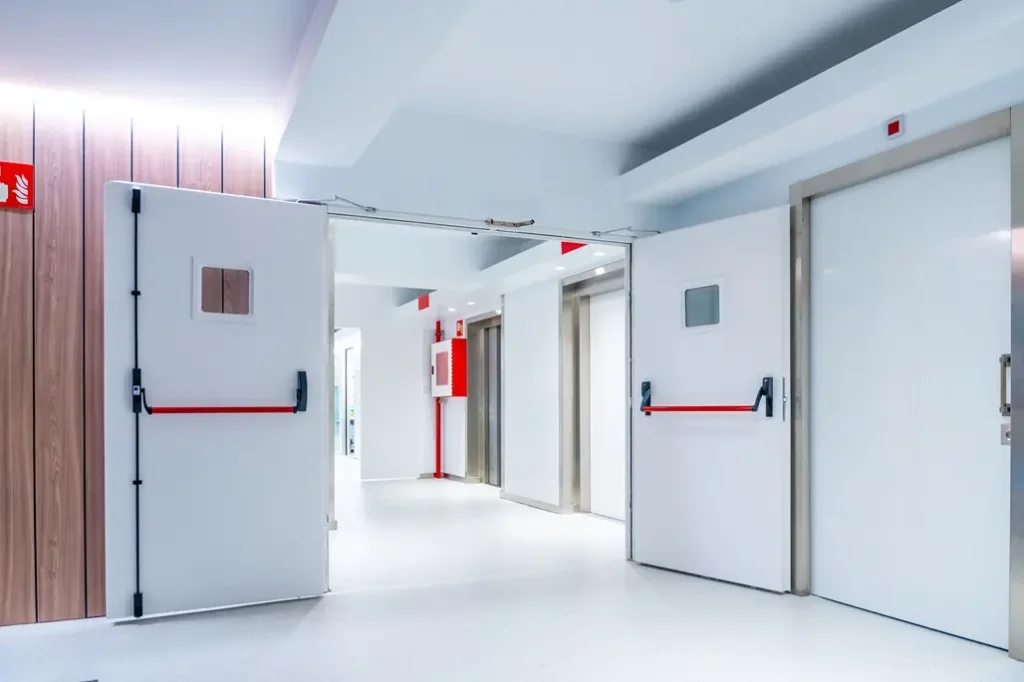
For commercial or high-traffic installations, consider specifying a heavy-duty mortise lockset. For fire-rated steel doors, ensure that all hardware — including the door closer, panic bar, or exit device — is rated to match the door’s fire rating.
Step 6: Check Clearances and Make Final Adjustments
With the door hung and hardware installed, check the gap around all four sides. The clearance should be consistent: approximately 3mm on the sides and top, and 8–10mm at the bottom (or enough to clear the finished floor surface).
Verify that the door closes fully and latches cleanly without force. Check that the door seals evenly against the door stop on the frame. Tighten any loose hardware, and if the installation includes a door closer, adjust it to the appropriate closing speed and latching force. For exterior or high-security applications, confirm that weather seals or smoke seals are fitted correctly around the perimeter.
5 Common Mistakes You Should Avoid When Installing a Flush Door
Even experienced contractors make these errors. Knowing what to watch for in advance will help you avoid a failed or substandard installation.
Mistake #1: Inaccurate Measurements Before Ordering
Rushing measurements is the most common reason a steel door installation gets derailed before it even begins. Steel door frames and slabs are custom-fabricated to size — there is no trimming or adjusting a steel frame in the field if it arrives too large or too small.
Always measure the rough opening before placing your order, and measure again when the frame arrives on site to confirm the dimensions match. Confirm the floor-to-slab height, the wall thickness (which determines the frame profile depth), and the swing direction before fabrication.
Mistake #2: Poor Anchoring or Inadequate Grouting of the Steel Frame
A steel door frame is only as secure as its connection to the wall. Insufficient grouting, missed anchor lugs, or the use of low-strength filler materials will result in a frame that shifts, loosens, or pulls away from the wall under repeated use or impact.
Always use non-shrink grout and ensure it fully fills the gap between the frame and the rough opening without voids. For retrofit installations, verify that expansion bolts or chemical anchors are installed into sound, solid masonry — not into crumbling or hollow sections of the wall.
Mistake #3: Not Verifying Plumb and Level Before Grouting
A steel frame that is even slightly out of plumb will cause the door to hang incorrectly, create uneven gaps, fail to latch properly, or swing open or shut on its own. Once the grout hardens, correcting a misaligned frame requires significant rework.
Check plumb on both vertical jambs and level on the head of the frame before committing to the grout. Use a quality spirit level and re-verify after any adjustment. This step is non-negotiable.
Mistake #4: Incorrect Hinge Alignment or Using the Wrong Hinge Type
Steel flush doors use heavy-duty hinges rated for the door’s weight. Using undersized or light-duty hinges on a heavy steel door will cause premature wear, hinge failure, and eventual misalignment of the door slab.
When hanging the door, ensure the hinge pins or bolts align perfectly with the frame preparations. Forcing misaligned hinges into place stresses the frame and the door leaf, which shortens the life of both. Always follow the manufacturer’s specifications for hinge type, size, and fastener torque.
Mistake #5: Ignoring Bottom Clearance for the Finished Floor
Many installers focus on the sides and head of the door but overlook the bottom gap. Too little clearance means the door drags on the finished floor, causing damage to both the door and the flooring surface. Too much clearance creates a visible gap that reduces acoustic performance, compromises smoke containment in fire-rated applications, and affects the overall appearance of the installation.
Account for the finished floor height before setting the frame. Tiles, raised flooring systems, and concrete screeds all add height after the frame is already in place. Coordinate with the flooring contractor so the door clearance is set correctly from the start.
Get Your Flush Door from a Trusted Door Manufacturer in the Philippines
All the right installation steps in the world won’t save a low-quality door. The foundation of a good installation is a well-made door. That is where Janus Steel comes in! We are a Philippines-based manufacturer of high-quality steel flush doors trusted by homeowners, contractors, architects, and major commercial brands across the country. Our steel flush doors are built for durability, designed for clean modern aesthetics, and engineered to handle the demands of both residential and commercial spaces.
Whether you need a full flush door for an office, a double steel flush door for a warehouse or commercial entrance, or a steel door with louvers for ventilated utility areas, Janus Steel has a solution that fits your project and your budget. Contact us today to learn more and get expert help with flush doors!