Fire safety is a serious issue for businesses in the Philippines. Fires in commercial and industrial buildings happen more often than many expect, and the damage can be severe (both to people and property). This is why choosing the right fire door matters. It supports your fire-safety system and strengthens how prepared your facility is during emergencies.
This buying guide helps you understand what to consider before you install a fire door. You will learn how each type works, where it is best used, and what factors to check when selecting a fire-rated door for your business.
What Is a Fire Door?
A fire door is a specialized door designed to slow down the spread of fire and smoke. It forms a barrier between one area of a building and another. This gives people more time to evacuate and gives firefighters a chance to control the situation.
Fire doors in the Philippines follow strict safety standards. They must be tested and certified under recognized fire-rating systems. You will often see fire ratings like:
- FD30 – withstands fire for 30 minutes
- FD60 – withstands fire for 60 minutes
- FD90 / FD120 – used in high-risk areas
A complete fire door assembly includes:
- A fire-rated door leaf
- A fire-rated frame
- Fire-rated hardware such as locks, closers, hinges, and seals
All parts must be fire-tested together. If you change even one component with a non-rated part, the door may lose its certification.
Why This Matters in the Philippines
The Philippines has many industrial zones, mixed-use buildings, and commercial spaces with high foot traffic. These conditions make fire containment more important. A reliable fire door helps prevent fires from spreading through corridors, stairwells, and exit routes.

Why Buying the Right Fire Doors Is Crucial?
Fire doors protect lives and assets. A poor-quality fire door puts your business at risk and can cause compliance problems. Choosing the right one is part of your responsibility as a building owner or operator.
It protects employees, tenants, and customers
A quality fire door keeps smoke, heat, and flames from spreading too quickly. This gives people more time to move into safer areas during a fire. In workplaces with large teams, shift workers, or a constant flow of customers, like factories, warehouses, malls, and hotels, this added time can be life-saving. A well-rated door supports safe evacuation and helps reduce panic during emergencies.
It prevents major property damage
Fire can destroy equipment, raw materials, stocks, and important documents within minutes. A fire door contains the fire in one section of the building and stops it from reaching high-value areas. This reduces loss and helps protect machines, electronics, and infrastructure—especially important for industrial facilities that rely on expensive equipment to operate daily.
It supports compliance with Philippine fire regulations
The Fire Code of the Philippines (RA 9514) requires fire-rated doors in many commercial, industrial, and mixed-use buildings. Fire Safety Inspectors check these doors during inspections for business permits and occupancy clearances. Buying the wrong door can cause compliance failures, such as:
- Notice of violation
- Delayed business permit release
- Repeat inspections
- Additional costs to replace non-compliant doors
Using the correct, certified fire door ensures your building meets the standards of the Bureau of Fire Protection (BFP).
It strengthens your insurance protection
Insurance providers often review whether fire-safety systems meet the required standards. A certified fire door helps your business remain eligible for coverage and may prevent issues when claiming damages after a fire event. Non-compliant doors can raise questions about negligence and may affect your ability to recover losses.
It helps sustain business continuity
A fire incident can shut down operations, disrupt production, and affect your customers. Even if the fire starts in a small area, the spread can compromise your entire facility. A well-installed fire-rated door buys you time and keeps other sections safe. This reduces downtime and gives your team a better chance to resume operations quickly.
It gives peace of mind
Business owners, safety officers, and facility managers carry the responsibility of protecting people and property. Knowing that your building is equipped with the correct fire doors helps reduce worry. It also reassures your employees and clients that safety is a priority.
Understanding Different Types of Fire Door
Choosing the wrong type of door is a common mistake. Each type is designed for specific environments, levels of risk, and building structures.
Below are the most common fire door options in the Philippines:
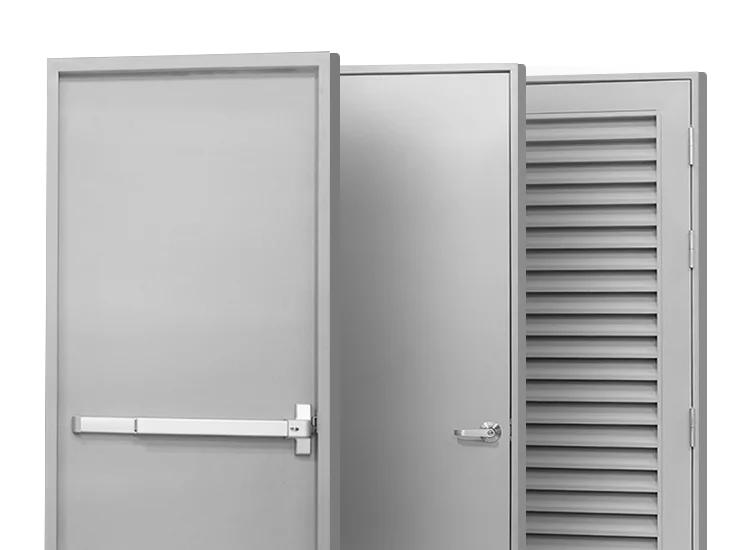
1. Steel Fire Doors
A steel fire door is the most reliable option for industrial, commercial, and high-risk environments. It is resistant to impact, moisture, corrosion, and extreme heat. This makes it suitable for facilities exposed to humidity, chemicals, or heavy use.
Steel fire doors are commonly used in:
- Warehouses
- Factories and industrial plants
- Parking buildings
- Service corridors
- High-traffic exit routes
They also perform well in tropical climates like the Philippines, where humidity can damage wooden doors.
2. Timber Fire Doors
Timber fire doors are used in hotels, offices, schools, and residential buildings. They offer a more aesthetic look and blend well with interior design.
They still provide fire resistance but may not be suitable for:
- Areas exposed to heavy moisture
- Harsh work environments
- High-traffic industrial zones
Timber fire doors are best for indoor applications where appearance matters.
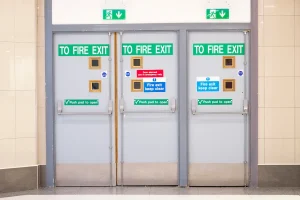
3. Fire Exit Doors
A fire exit door allows fast evacuation during fire emergencies. It must open easily from the inside, usually with a push bar or panic hardware.
Important considerations:
- Some fire exit doors are fire-rated
- Some are non-rated but still required as emergency exits
The correct type depends on your building layout and fire compartment zones. For industrial facilities, many exit doors also need fire-rating to prevent flames from blocking evacuation routes.
4. Fire-Rated Glass Doors
These are often used in commercial and office buildings that require visibility without compromising fire protection. They help maintain open sightlines while still resisting fire for a specified duration.
However, they are less durable in heavy industrial environments and require more careful maintenance.
5. Insulated vs Non-Insulated Fire Doors
This feature determines how the door handles heat transfer.
- Insulated fire doors block both fire and heat. Best for spaces with flammable materials, chemicals, or high-heat industrial operations.
- Non-insulated fire doors block fire and smoke but may still allow heat to pass through. Suitable for low-risk areas.
Industries in the Philippines that deal with heat or chemicals often choose insulated doors for maximum protection.

Practical Fire Door Buying Guide for Industrial Businesses
Choosing a fire door should follow a structured process. Below are the essential factors you should check before finalizing your purchase.
1. Confirm Fire Rating and Certification
Check the fire rating required for your building based on occupancy and risk level. For example:
- Storage rooms with chemicals may require FD90 or higher
- Corridors and exit routes typically require FD60
- Low-risk office areas may use FD30
Make sure the manufacturer provides:
- A valid fire test report
- Certification that matches Philippine or international standards
- A complete door assembly with rated hardware
Avoid buying doors without proper documentation. These often fail inspections.
2. Choose the Right Material for Your Environment
In Philippine conditions, steel is usually recommended for industrial and commercial spaces due to:
- High humidity levels
- Corrosive coastal environments
- Heavy daily use
- Temperature fluctuations
Wooden fire doors are acceptable for offices or indoor areas but require controlled environments to maintain durability.
3. Select a Door Based on Its Placement
Each location inside a building requires specific features.
Examples:
- Plant floors: Heavy-duty steel, higher fire rating
- Electrical rooms: Steel door with smoke seals
- Storage rooms: Insulated fire-rated door
- Warehouse exit routes: Fire exit door with panic hardware
- Loading areas: Steel doors with durable coatings
Using the wrong type may compromise the safety of the entire fire-compartment system.
4. Evaluate the Hardware
Hardware is part of the fire door assembly. If the hardware is not fire-rated, the door will not perform correctly.
Check for:
- Fire-rated hinges
- Fire-rated locks
- Fire-rated lever sets
- Door closers that shut automatically
- Intumescent seals that expand during fire
- Smoke seals to block smoke movement
Hardware should match the door’s rating and specifications.
5. Understand Door Construction
High-quality fire doors use thick steel sheets and durable internal cores. Features to look for:
- A solid, fire-resistant core
- Reinforced edges to prevent warping
- Galvanized or stainless steel skins
- Heavy-duty stiffeners or reinforcements
These ensure the door stays intact during fire exposure.
6. Get Accurate Measurements
Improper measurements cause gaps that allow smoke to pass. Philippine regulations specify tight tolerances for fire doors.
Before ordering:
- Measure door height and width
- Check wall thickness
- Inspect floor levels
- Verify the swing direction
- Consider clearance requirements
A mismatch will delay the installation and fail compliance checks.
7. Consider External Environmental Conditions
Many Philippine facilities are exposed to salt air, humidity, and rainfall.
Ask the manufacturer about:
- Anti-corrosion coatings
- Powder-coated finishes
- Rust protection treatments
- Stainless steel options for coastal areas
This ensures long service life, especially in island provinces and industrial zones near the sea.
8. Work With Certified Installers
A fire door must be installed correctly to maintain its rating.
Certified installers ensure:
- Correct frame alignment
- Proper anchoring
- Accurate sealing
- Compliance with fire-testing guidelines
Poor installation is a major cause of fire door failures.
9. Plan for Regular Inspection and Maintenance
Fire doors require periodic checks to stay compliant. You should inspect:
- Hinges and closers
- Gaps and clearances
- Seals and gaskets
- Damaged door leaf or frame
- Misalignment due to building movement
Many businesses overlook this step, but it is part of maintaining compliance with the Fire Code.

Get the Right Fire Doors From a Trusted Manufacturer
Choosing the right fire doors protects your building, your people, and your daily operations. You need doors that meet Philippine fire codes and pass the proper tests to ensure real safety. Choosing the wrong type can lead to compliance issues and extra costs later on. Given that, this makes careful selection an essential part of your safety planning.
Working with a manufacturer that understands local standards gives you confidence in every installation. You get doors designed for reliability, durability, and long-term performance. If you want guidance or need help choosing the right specifications, contact Janus Steel. Reach out today for high-quality fire doors.