Every March, the Philippines observes Fire Prevention Month as a national reminder that fire safety is a year-round responsibility. For building owners, property managers, and business operators, this season often prompts a familiar question: Are we actually prepared for a fire?
Most teams schedule a fire drill, tick the box, and move on. But fire preparedness goes beyond knowing where the exit is. It also depends on whether the physical equipment in your building — especially your fire doors — is ready to do its job when it matters most.
This article breaks down why fire drills and fire door inspections need to go hand in hand, what a proper inspection involves, and how to make smarter decisions when buying fire doors for your property.
How Common Are Fire Incidents in the Philippines?
The numbers are sobering. According to the Bureau of Fire Protection (BFP), the nationwide count of fire incidents in 2024 reached 18,256 cases from January to December, up from 16,433 the year before. Property damage came in at nearly P14 billion, while civilian fatalities rose to 341 from 321 in 2023.
What makes these figures more alarming is the trend during fire season. In just the first two months of 2024, the BFP reported a 25 percent increase in fire incidents compared to the same period in 2023, with smoking, unattended cooking flames, and electrical ignition listed as the leading causes. Commercial buildings, warehouses, and institutional facilities are not exempt. The BFP recorded 768 fire incidents in mercantile occupancies and 385 in industrial areas in 2024 alone.
These numbers are not shared to create panic. They are shared because understanding the scale of the problem is the first step toward taking fire prevention seriously, not just during Fire Prevention Month, but throughout the year.
Why Fire Drills Alone Are Not Enough to Ensure Fire Safety
A fire drill is valuable. It trains people to stay calm, follow evacuation routes, and respond quickly when an alarm goes off. But a fire drill cannot tell you whether the physical barriers in your building are working. Think about what actually happens when a fire breaks out. People push toward the nearest exit. They move fast. They expect fire doors to open immediately, to close behind them, and to hold back smoke and flames while they escape. If a door fails at any of those points, it stops being a safety feature and becomes a liability.
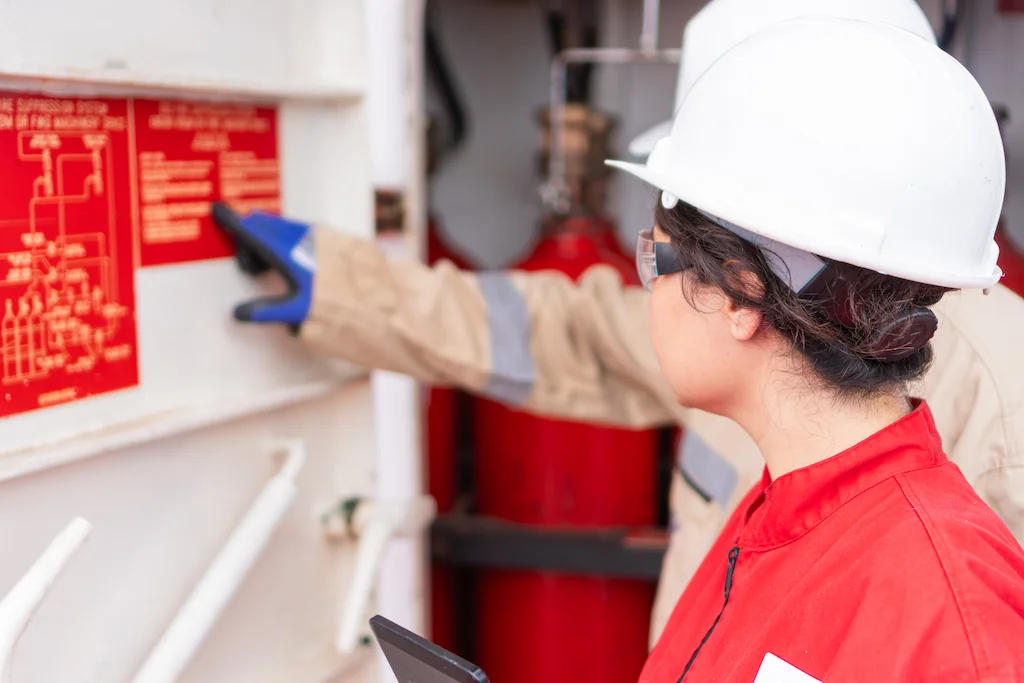
This is the part that fire drills simply cannot test. A drill observes human behavior. A fire door inspection tests whether the equipment itself is ready. Both are necessary, and neither fully replaces the other. There is also a practical gap that most facilities deal with: fire doors get used every single day. Hinges wear down. Door closers lose tension. Frames shift. Hardware gets swapped out without proper documentation. None of these issues are visible during a fire drill, but all of them can compromise a door’s fire rating in a real emergency.
How Fire Prevention Month Ties Into Your Inspection Schedule
For many building owners and business operators, Fire Prevention Month is when fire safety issues finally get attention. Inspections get scheduled, fire exits get cleared, and equipment gets checked. But if your fire door inspection only happens once a year because the BFP is coming, you are already behind. Understanding what this month means legally, what inspectors look for, and how to prepare before they arrive gives you a real advantage over simply reacting to the season.
What Fire Prevention Month Means for Your Building
Fire Prevention Month in the Philippines has been observed every March since Proclamation 115-A was signed in 1966. It is the period when the BFP intensifies its public awareness campaigns, increases inspection activities, and reminds business owners and building managers to review their fire safety measures.
For anyone with a commercial building, a rental property, or an industrial facility, this month is directly tied to your legal obligations. Under Republic Act 9514, the Revised Fire Code of the Philippines, all occupied buildings must secure a Fire Safety Inspection Certificate (FSIC) from the BFP before a business permit or occupancy certificate is issued or renewed. That means an annual inspection is not optional. It is a legal requirement.
What the BFP Looks for During an Inspection
When a BFP inspector visits your building, they are checking whether your fire safety systems are fully installed, functional, and compliant with RA 9514. Fire doors are a significant part of that checklist.
Inspectors typically look at whether fire-rated doors are present at required locations, whether they close and latch automatically, whether hardware is fire-rated and unmodified, and whether exits are clear and properly signposted. Any violation can delay your FSIC, which in turn delays your business permit.
Why Getting Ahead of the Inspection Matters
The smarter move is to conduct your own pre-inspection walkthrough before the BFP arrives. Below is a practical checklist to use before Fire Prevention Month:
- Walk every fire exit door and test that it closes and latches on its own
- Check that fire-resistance labels are still present and legible on all fire doors
- Look for any damage to door frames, such as warping, gaps, or cracks
- Confirm that no unauthorized hardware, additional locks, or glass panels have been added
- Remove any objects being used to prop fire doors open
- Verify that exit pathways are clear, properly lit, and free of obstructions
- Document all findings in a Fire Safety Maintenance Report (FSMR)
How Important Is Fire Door Inspection for Businesses?
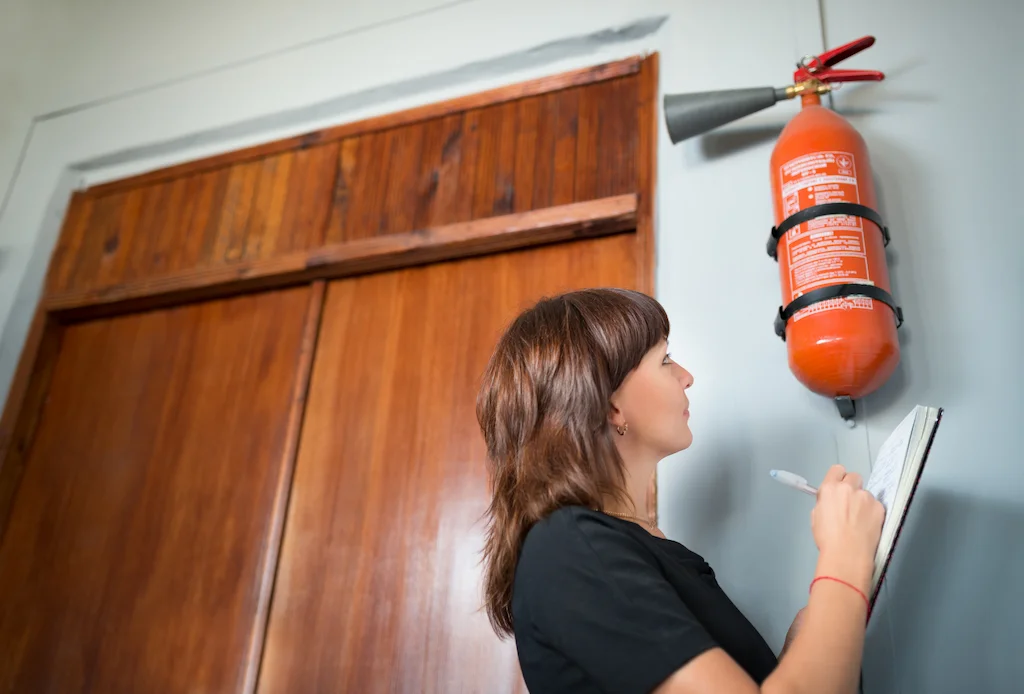
Most businesses think about fire safety in terms of alarms, sprinklers, and evacuation drills. Fire doors often get overlooked until something goes wrong or a BFP inspector flags a violation. But fire door inspection is one of the most direct ways to protect your occupants, reduce liability, and stay on the right side of the law. Here is a closer look at what fire doors actually do, what inspections cover, and how often your building should be checked.
The Role of Fire Doors During an Emergency
A fire door is not just a door with a label on it. It is a certified barrier designed to contain fire and smoke for a specific period of time, typically 60 or 90 minutes, giving occupants enough time to evacuate and giving emergency responders time to act.
When a fire door fails during an emergency, it fails the people behind it. Smoke spreads faster than most people expect, and a door that does not seal correctly can let toxic fumes into a corridor within minutes. This is why the physical condition of every fire door in your building matters.
What Fire Door Inspection Actually Checks
A proper fire door inspection goes through each door systematically. Here is what it covers:
- Fire-Resistance Label: Every compliant fire door must carry a fire-resistance label from the manufacturer. This label certifies the door’s rating and must remain intact. A door with a missing or damaged label is considered non-compliant during a BFP inspection, regardless of how the door itself looks.
- Automatic Closing and Latching: Fire doors must close on their own and latch securely every single time. A door closer that does not engage fully, or a door that requires a push to close, is a failed inspection point. This is one of the most common issues found in older buildings.
- Door Frame and Seal Condition: The frame is just as important as the door. Gaps between the door and frame, warped frames, or damaged intumescent seals all reduce the door’s ability to hold back fire and smoke. These issues are easy to miss during routine use but show up immediately during a proper inspection.
- Approved Hardware Only: Hinges, locks, and closers on a fire door must all be approved for fire-rated use. Swapping out hardware with standard commercial parts, even for something that looks identical, can void the door’s certification entirely.
- No Unauthorized Modifications: Adding an extra lock, replacing the handle, or cutting in a glass panel without manufacturer approval can invalidate the fire rating. If these modifications were made during a previous renovation, they need to be addressed before your next BFP inspection.
Guide in Choosing the Right Fire Door
Buying a fire door is not the same as buying a regular steel door. The wrong choice can leave your building non-compliant, put your occupants at risk, and cost you more in replacements and penalties down the line. Whether you are constructing a new building, renovating an existing one, or replacing doors that failed a recent BFP inspection, this guide covers what you need to know before making a decision.
A Clear Fire-Resistance Rating
Look for doors with a 60-minute or 90-minute fire-resistance rating, and make sure the rating matches the requirement for the specific location in your building. Stairwell doors, for example, typically require a higher rating than corridor doors.
Complete and Approved Hardware
The door, frame, and hardware should all be sourced and certified together. Fire-rated hinges, locks, closers, and seals must be included and must match the manufacturer’s specifications. Mixing and matching hardware from different suppliers is a common compliance mistake.
Philippine-Made Doors Built for Local Compliance
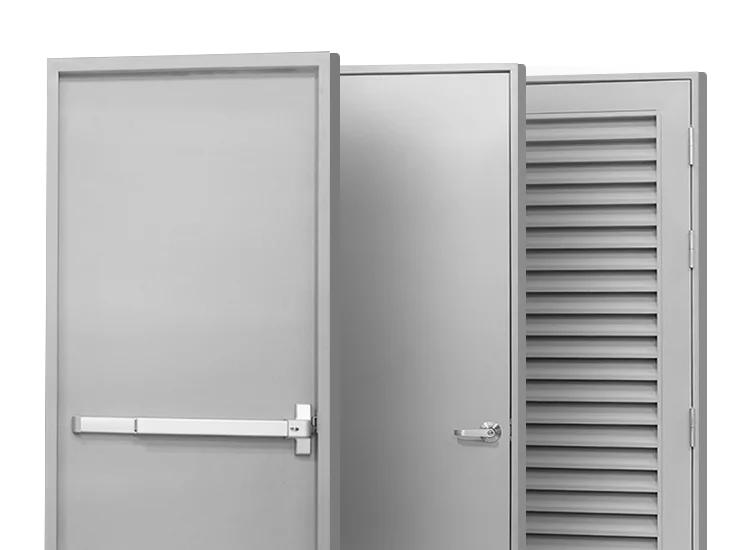
Locally manufactured fire doors are often better suited for Philippine building requirements because they are designed in reference to both RA 9514 and internationally recognized standards like NFPA 80. This makes it easier to verify compliance and get documentation support from the manufacturer when you need it.
Manufacturer Documentation Support
When the BFP inspects your building, you may need to present certification documents for your fire doors. A reliable supplier should be able to provide product documentation, fire test reports, and technical support if questions come up during an inspection.
Proper Installation
A fire door that is incorrectly installed, even if it carries a valid certification, can fail during a real emergency. Always work with a manufacturer or installer that understands proper fitting requirements, including clearances, hardware placement, and frame anchoring.
Get Your Fire Doors From a Trusted Philippine Manufacturer
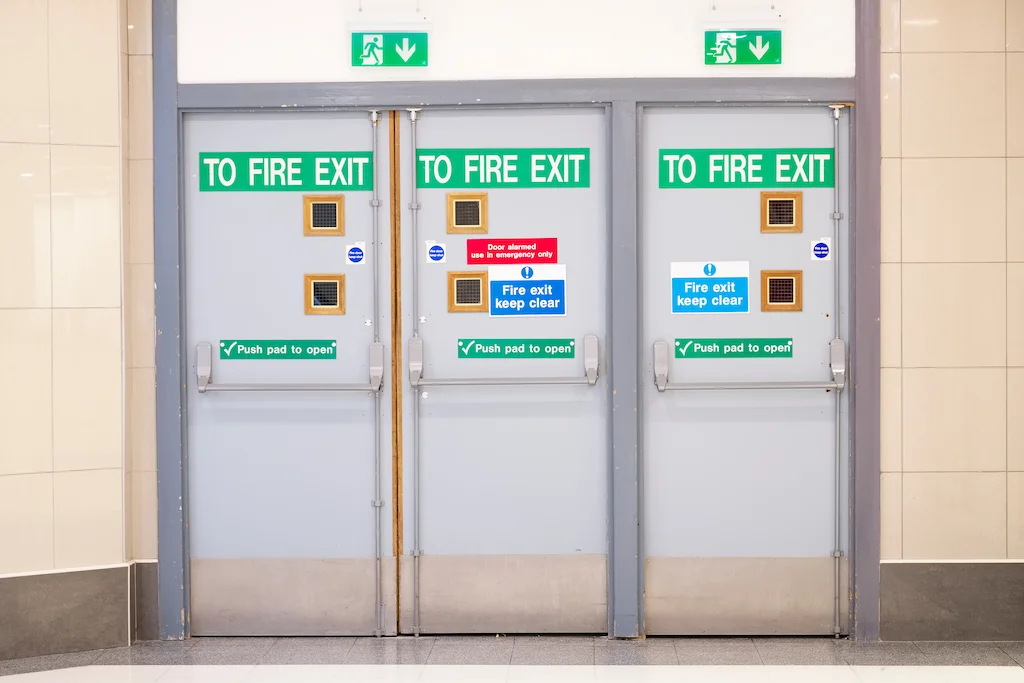
Choosing the right fire door is one of the most important decisions you can make for your building’s fire safety plan. It affects your BFP compliance, your occupants’ safety, and your liability as a property owner or business operator.At Janus Steel OPC, we have been manufacturing high-quality steel doors for residential, commercial, and industrial clients across the Philippines since 2015. Our fire exit doors are built for reliable performance, designed for fast evacuation, and suited to meet the requirements set by the Bureau of Fire Protection under RA 9514. Contact us today to learn more!